
Blog
Articles on adult ADHD assessment, treatment and wellbeing.
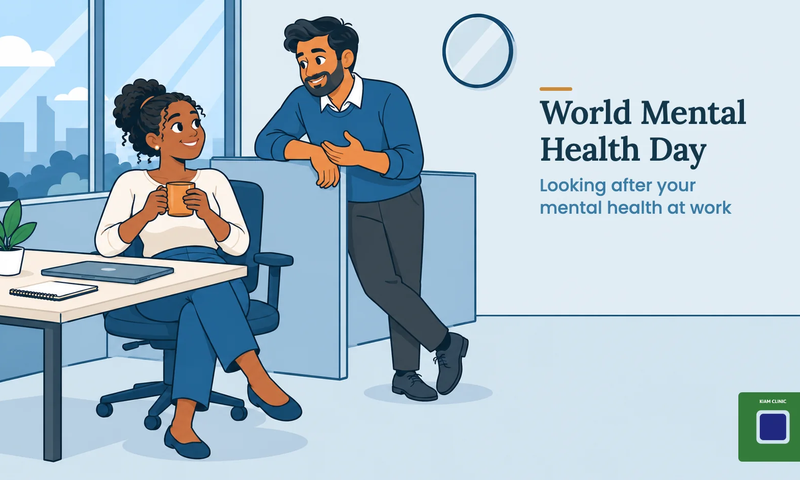
World Mental Health Day: looking after your mental health at work
Looking after your mental health at work means noticing the early signs of stress and burnout, keeping small daily habits that protect your wellbeing, and knowing what support you can ask for, from workplace adjustments to the government's Access to Work scheme. Low mood lasting most of the day, every day, for more than two weeks deserves a professional view.
10 October 2026 · Kiam Clinic · 7 min read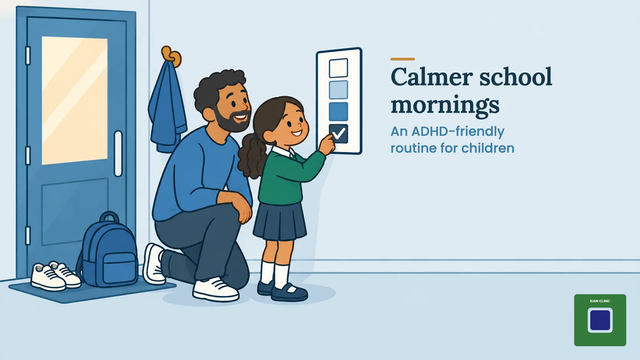
Calmer school mornings: an ADHD-friendly routine for children
An ADHD-friendly morning routine gives your child a clear, predictable order of steps, shown somewhere they can see it. Doing some jobs the night before, giving one calm instruction at a time and praising what goes well can make school mornings calmer. Your child's school SENCo can also help plan support.
4 October 2026 · Kiam Clinic · 7 min read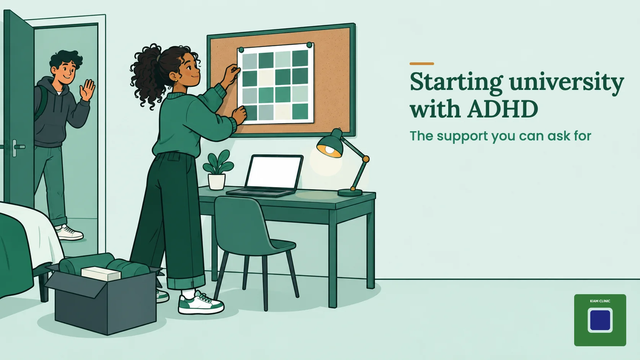
Starting university with ADHD: the support you can ask for
If you have ADHD and are starting university, you can ask for support. Your university must make reasonable adjustments, such as written instructions or a quiet place to work. In England, you may also be able to get Disabled Students' Allowance, a grant for study-related costs that you do not pay back.
3 October 2026 · Kiam Clinic · 7 min read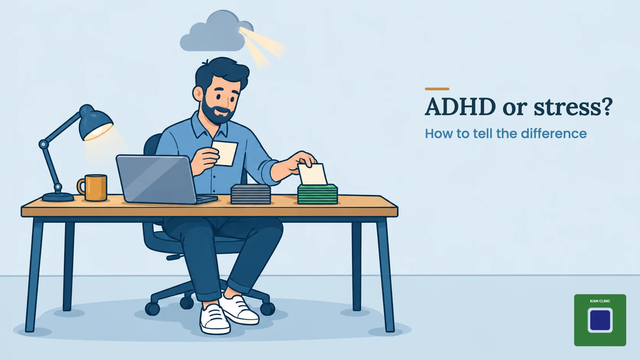
ADHD or stress? How to tell the difference
ADHD and stress can both cause poor concentration, forgetfulness and irritability. The key difference is timing: stress is usually a reaction to pressure, while ADHD is a lasting pattern that starts in childhood and affects several areas of life. The two can overlap, and stress can make existing ADHD symptoms harder to manage.
2 October 2026 · Kiam Clinic · 7 min read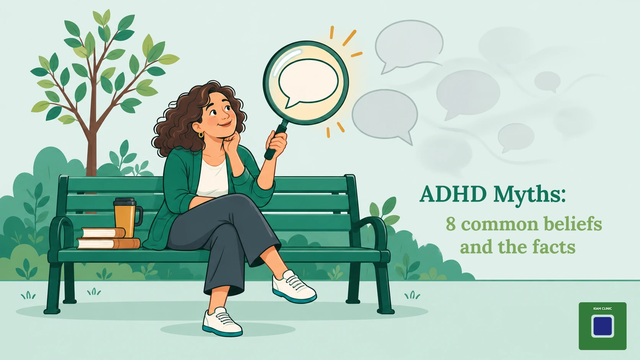
ADHD Awareness Month: 8 common ADHD myths, and the facts
Common ADHD myths say it isn't real, only affects boys, disappears with age, or is caused by bad parenting or sugar. The evidence says otherwise. ADHD is a recognised neurodevelopmental condition, linked to genes and environment, that affects people of every gender and age and, for most, continues into adult life.
1 October 2026 · Kiam Clinic · 7 min read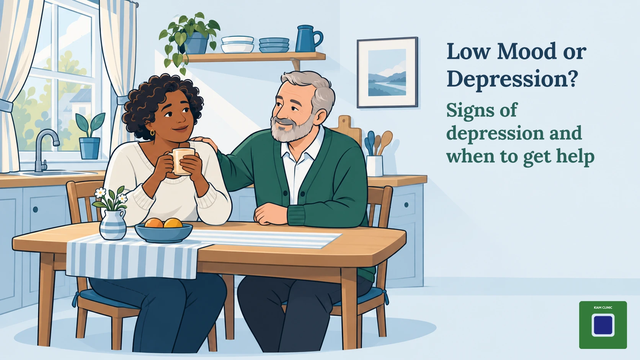
Low mood or depression? Signs of depression and when to get help
Low mood usually lifts within a few days or weeks. Depression lasts longer, fills most of the day and starts to affect work, relationships and self-care. The NHS advises seeing a GP if you have had symptoms of depression for most of the day, every day, for more than two weeks.
30 September 2026 · Kiam Clinic · 9 min read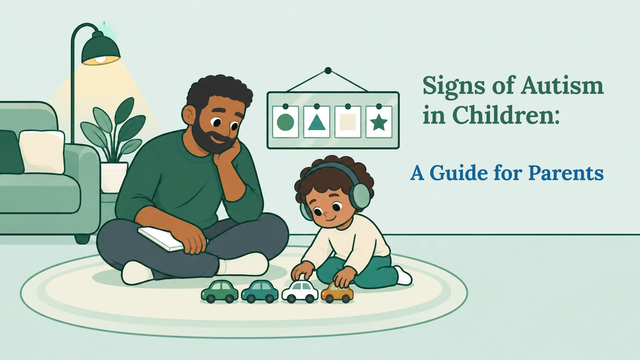
Signs of autism in children: a guide for parents
Signs of autism in children usually show up in three areas: communicating with others, behaviour and interests, and the senses. They can appear in toddlers or not until the teenage years, and every autistic child is different. No single sign means a child is autistic: what matters is a pattern across home and school that affects daily life.
30 September 2026 · Kiam Clinic · 9 min read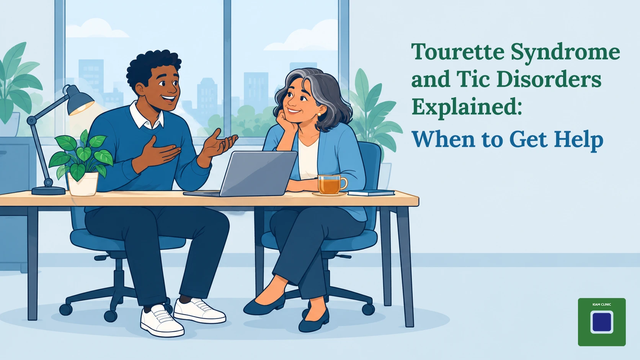
Tourette syndrome and tic disorders explained: when to get help
Tourette syndrome is a tic disorder where several movement tics and at least one vocal tic have lasted more than a year, starting before age 18. Tics are sudden, repeated movements or sounds that are hard to control. It's worth getting help if tics cause pain, distress or daily problems, or if new tics begin in adulthood.
30 September 2026 · Kiam Clinic · 9 min read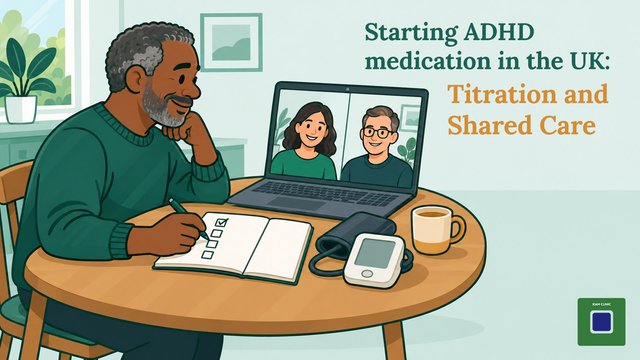
Starting ADHD medication in the UK: titration and shared care
Starting ADHD medication in the UK begins with health checks, including heart rate, blood pressure, height, weight and medical history. The dose is then adjusted gradually, with regular reviews, until benefits are clear and unwanted effects are manageable. Once you are stable, your GP may take over routine prescribing under a shared care agreement.
29 September 2026 · Kiam Clinic · 9 min read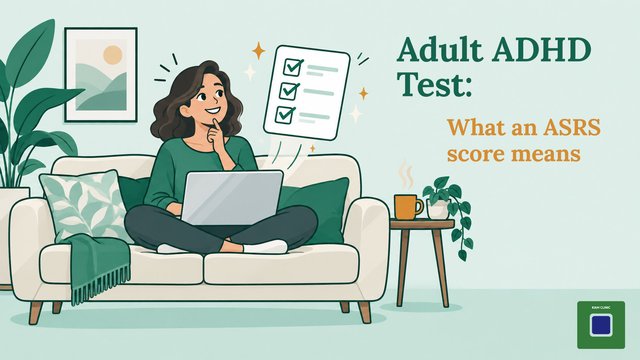
Free adult ADHD self-test: what the ASRS can and can't tell you
The ASRS, the World Health Organization's Adult ADHD Self-Report Scale, is a short screening questionnaire for adults. It can show whether your answers look like those of adults with ADHD, and whether a full assessment is worth considering. It can't diagnose ADHD or rule it out: only a specialist assessment can do that.
28 September 2026 · Kiam Clinic · 9 min readGet new articles on WhatsApp
We share our new articles on the Kiam Clinic WhatsApp channel. Follow it to see them in your WhatsApp Updates.