
Blog
Articles on adult ADHD assessment, treatment and wellbeing.
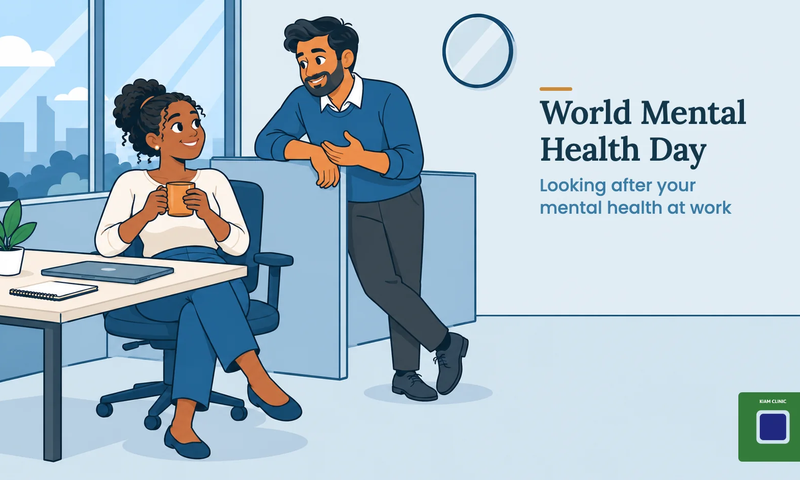
World Mental Health Day: looking after your mental health at work
Looking after your mental health at work means noticing the early signs of stress and burnout, keeping small daily habits that protect your wellbeing, and knowing what support you can ask for, from workplace adjustments to the government's Access to Work scheme. Low mood lasting most of the day, every day, for more than two weeks deserves a professional view.
10 October 2026 · Kiam Clinic · 7 min read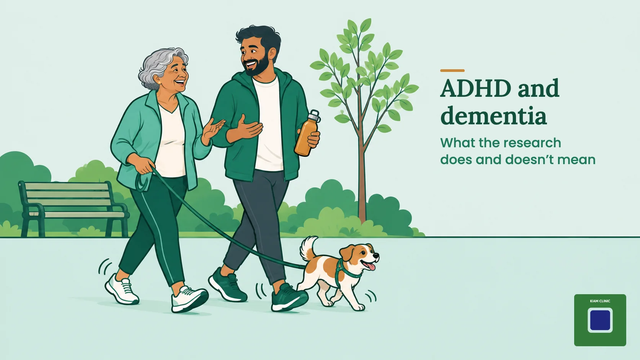
ADHD and dementia: what the research does and doesn't mean
Some studies link adult ADHD with a higher chance of dementia in later life. But a link is not proof that ADHD causes dementia, and most people with ADHD never develop it. We explain what a 2025 review found, what it can and can't tell us, and the everyday steps that help lower dementia risk.
16 October 2026 · Kiam Clinic · 7 min read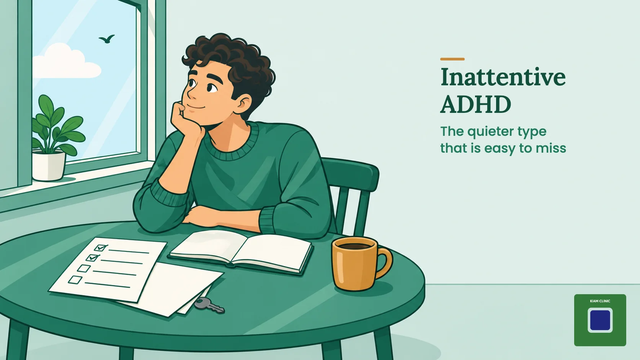
Inattentive ADHD: the quieter type that is easy to miss
Inattentive ADHD is a form of ADHD where the main difficulties are with focus, organisation and forgetfulness, with few or no signs of hyperactivity. It is often missed because it is quiet rather than disruptive. Signs include losing things, leaving tasks unfinished and being easily distracted. Only a specialist assessment can diagnose it.
15 October 2026 · Kiam Clinic · 7 min read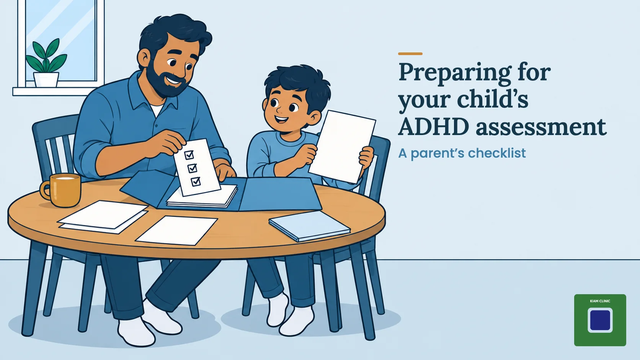
Preparing for your child's ADHD assessment: a parent's checklist
To prepare for a child ADHD assessment, gather a clear picture of how your child is at home and at school, from early childhood to now. Note their early development, collect school reports and any support plan, write down recent examples, and talk to your child simply about what will happen on the day.
14 October 2026 · Kiam Clinic · 7 min read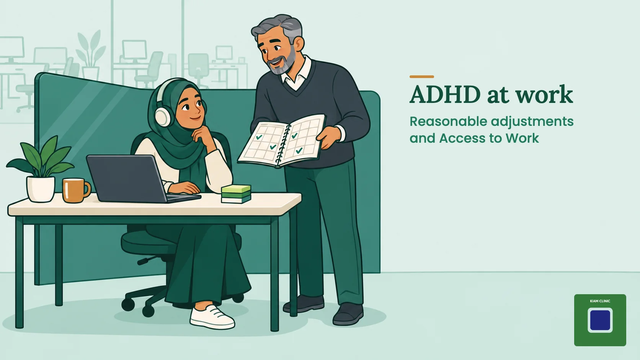
ADHD at work: reasonable adjustments and Access to Work
If ADHD makes parts of your job harder, your employer must consider reasonable adjustments, such as a quieter workspace or written instructions, if your ADHD counts as a disability under the Equality Act. The government's Access to Work scheme can also pay for support like a job coach, and you do not need a diagnosis to apply.
13 October 2026 · Kiam Clinic · 7 min read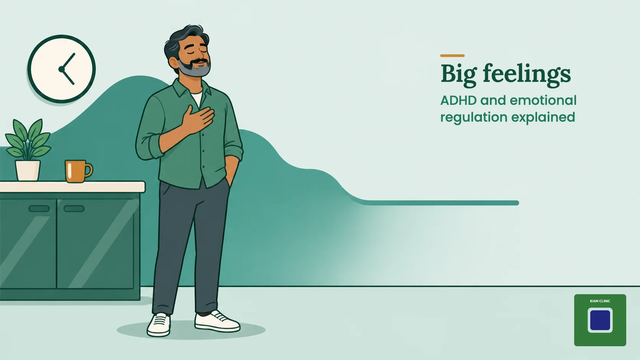
Big feelings: ADHD and emotional regulation explained
Many people with ADHD find that feelings arrive quickly, hit hard and take real effort to steady. Researchers call this emotional dysregulation, and estimates suggest it affects between 30% and 70% of adults with ADHD. It is a recognised feature of the condition, not a character flaw, and structured psychological support, including CBT, can help.
9 October 2026 · Kiam Clinic · 7 min read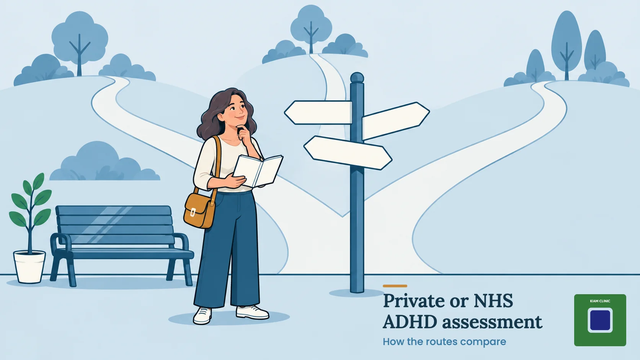
Private or NHS ADHD assessment: how the routes compare
There are three main routes to an ADHD assessment in the UK: an NHS referral through your GP, the NHS Right to Choose scheme in England, and a private assessment you pay for yourself. All three should lead to the same full assessment by a specialist. They differ in the wait, the cost and what happens afterwards.
8 October 2026 · Kiam Clinic · 7 min read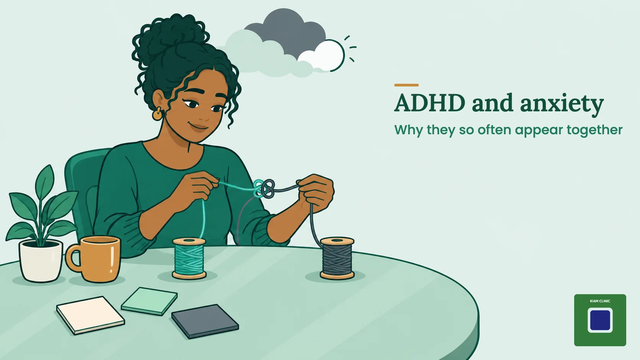
ADHD and anxiety: why they so often appear together
ADHD and anxiety often appear together. Research shows anxiety disorders are more common in people with ADHD than in people without it, and the two share signs such as restlessness, poor concentration and trouble sleeping. Because they overlap, a careful assessment matters: it can find one, the other, or both, and shape a plan that treats each.
7 October 2026 · Kiam Clinic · 7 min read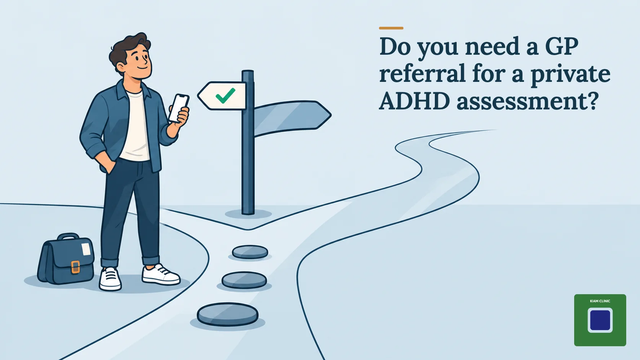
Do you need a GP referral for a private ADHD assessment?
No — you can book a private ADHD assessment for yourself or your child at Kiam Clinic without a GP referral. Policies vary between private providers, so it's worth checking first, and telling your GP is still a good idea if you might want shared care for medication later.
6 October 2026 · Kiam Clinic · 7 min read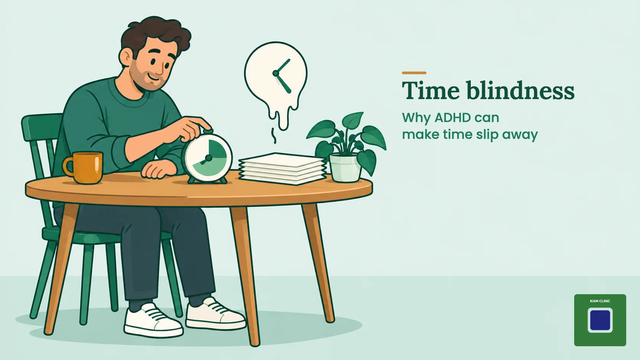
Time blindness: why ADHD can make time slip away
Time blindness is a common part of adult ADHD: struggling to sense how much time has passed, underestimating how long tasks take, or losing hours to hyperfocus. It has a real basis in how ADHD affects the brain, and there are practical ways to make time easier to see and plan around.
5 October 2026 · Kiam Clinic · 7 min readGet new articles on WhatsApp
We share our new articles on the Kiam Clinic WhatsApp channel. Follow it to see them in your WhatsApp Updates.