Specialist assessment

Depression Assessment & Treatment

Assessment and treatment for low mood that has lasted, deepened, or stopped responding to what used to help. An assessment establishes what is happening and what the options are, including talking therapies.

Book Your Assessment

Online or In-person

The assessment itself is the same either way: the same clinician, the same criteria, the same written report.

Adults

Online Depression Assessment & Treatment

Online

Assessment and treatment for low mood that has lasted, deepened, or stopped responding to what used to help. An assessment establishes what is happening and what the options are, including talking therapies.

  • A full clinical assessment with a Consultant Psychiatrist
  • Assessment of severity, duration and risk
  • Screening for conditions that commonly occur alongside it
  • An individualised treatment plan
  • A written summary for you and, with consent, your GP

£450

60 min
Adults

In-Person Depression Assessment & Treatment

In person

Assessment and treatment for low mood that has lasted, deepened, or stopped responding to what used to help. An assessment establishes what is happening and what the options are, including talking therapies.

  • A full clinical assessment with a Consultant Psychiatrist
  • Assessment of severity, duration and risk
  • Screening for conditions that commonly occur alongside it
  • An individualised treatment plan
  • A written summary for you and, with consent, your GP

£550

60 min

Understanding depression

What is depression?

Everyone feels low from time to time. Depression is different. It is a persistent change in mood that lasts for weeks or months rather than days, and it affects how you think, how your body feels and how you function, not only how you feel. The NHS describes it as a real illness with real symptoms, and not something a person can simply pull themselves out of.
Depression is usually recognised when low mood, or a loss of interest and pleasure in things you would normally enjoy, has been present for most of the day, nearly every day, for at least two weeks, alongside other symptoms such as changes to sleep, appetite or energy, difficulty concentrating, feelings of guilt or worthlessness, and thoughts that life is not worth living.
It ranges from mild, where symptoms are present but you are still managing, through to severe, where daily life becomes very hard to sustain. Depression often occurs alongside anxiety, and it is common in people who also have ADHD, a long-term physical illness, or a history of trauma. Left untreated it tends to persist or return, which is why an accurate assessment early on matters.

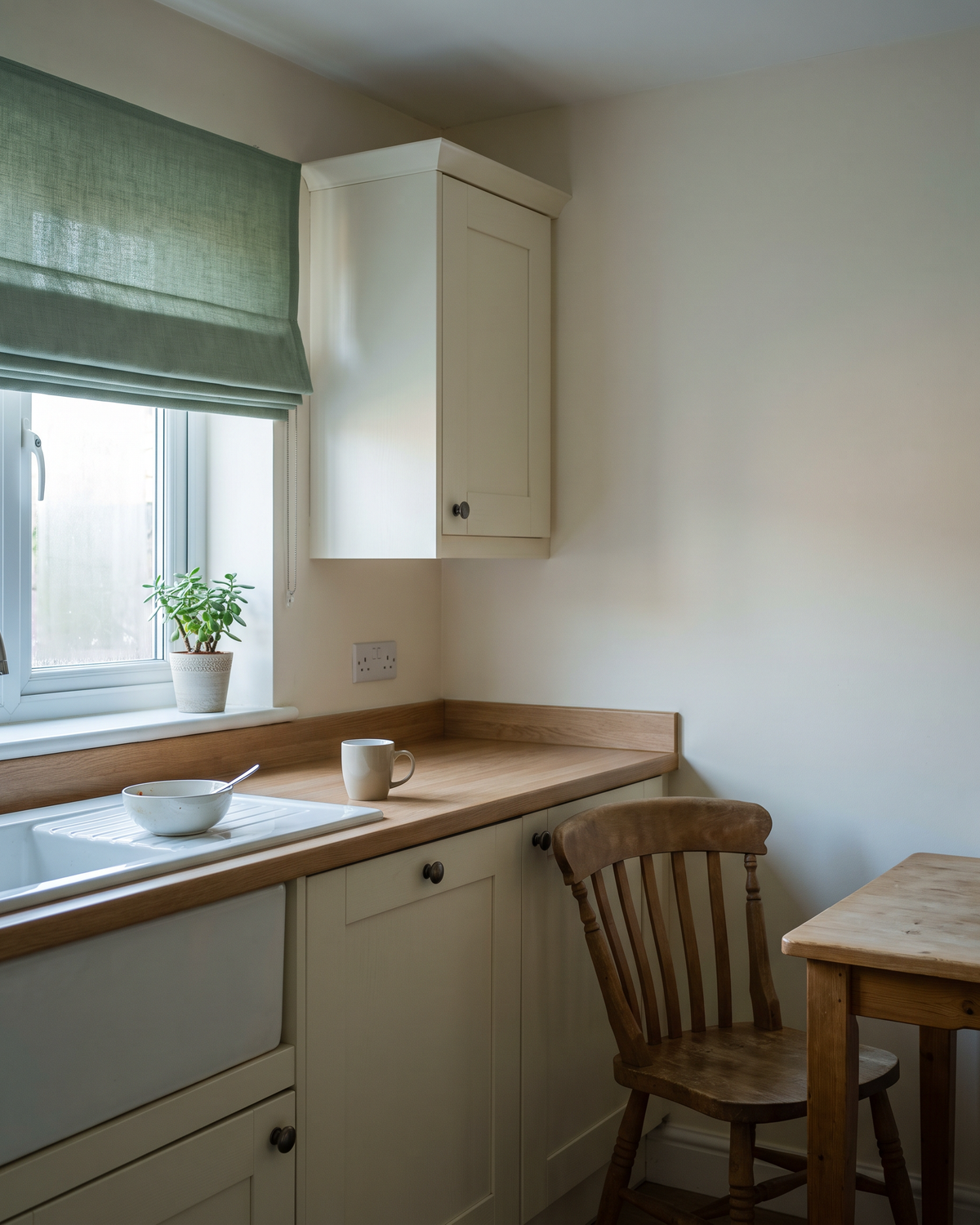
An empty kitchen in early morning light, a mug of tea left untouched on the worktop.

Recognising the signs

Depression looks different from person to person. Common symptoms include:

  • Persistent low mood, sadness or feeling empty
  • Losing interest or pleasure in things you used to enjoy
  • Feeling hopeless, worthless or unusually guilty
  • Tiredness and low energy, even after rest
  • Sleeping much more or much less than usual, or waking very early
  • Changes in appetite or weight
  • Difficulty concentrating, remembering or making decisions
  • Feeling anxious, restless or irritable
  • Withdrawing from friends, family and activities
  • Unexplained aches, pains or digestive problems
  • Thoughts of death, self-harm or that life is not worth living
Causes

What causes depression?

There is rarely a single cause. Depression usually develops from a combination of factors: a vulnerability that a person carries, such as family history or a self-critical temperament, and pressures or losses in their life that tip the balance. Sometimes there is an obvious trigger, such as a bereavement, a relationship breakdown or redundancy. Sometimes there is none, and the depression seems to arrive from nowhere.


Understanding what has contributed in your case is part of the assessment, because it shapes what will help. Depression that follows a physical illness, a period of heavy drinking or a hormonal change is approached differently from depression that has recurred several times over a lifetime.

Common contributing factors

Factors that are known to increase the likelihood of depression include:

  • Stressful or upsetting life events, such as bereavement, divorce, illness, redundancy or money worries
  • A family history of depression, which increases vulnerability, especially to more severe depression
  • Personality traits such as low self-esteem or being highly self-critical
  • Loneliness, isolation or the loss of a supportive network
  • Pregnancy, childbirth and the months after birth, and the years around menopause
  • Long-term or serious physical illness, including chronic pain, heart disease and an underactive thyroid
  • Alcohol and drug use, which may feel like a way of coping but tends to deepen and prolong low mood
  • Other mental health conditions, including anxiety, ADHD and the after-effects of trauma
Types of depression

Depression is not one condition

Depression takes several forms, and telling them apart is one of the main purposes of a specialist assessment, because the treatment that helps one form can be unhelpful, or harmful, for another.

Major depressive disorder

A distinct episode of low mood, or loss of interest and pleasure, lasting at least two weeks alongside other symptoms, and clearly affecting daily life. This is what most people mean by clinical depression. It can happen once, or return.

Persistent depressive disorder (dysthymia)

A milder low mood that has lasted two years or more. People often come to see it as simply how they are and may not think of seeking help, but it responds to treatment in the same way a shorter episode does.

Recurrent depression

Episodes that return after a period of recovery. Each episode makes another more likely, so the plan covers preventing relapse and not only treating the episode in front of us.

Depression with anxiety

Very common. Persistent worry, restlessness or panic sit alongside the low mood, and for some people the anxiety is the more distressing part. Both are treated together rather than one after the other.

Perinatal depression

Depression during pregnancy (antenatal) or in the year after birth (postnatal). It is common, it is not a reflection on the parent, and it is treatable.

Seasonal affective disorder

Depression that follows a seasonal pattern, usually starting in autumn or winter and lifting in spring.

Bipolar depression

Low episodes that form part of bipolar disorder, in which periods of unusually elevated mood or energy also occur. During a low episode it can look identical to major depression, but it is treated differently, which is why we screen for it.

Treatment-resistant depression

Depression that has not improved after adequate courses of standard treatment. A fresh, thorough assessment is the first step, because a proportion of these turn out to be a different condition — most often bipolar disorder — that has not yet been recognised.

Next step

When should you seek an assessment?

You may benefit from a specialist assessment if:

  • Low mood has lasted for most of the day, most days, for more than two weeks.
  • You have lost interest in things that used to matter to you.
  • It is affecting your work, your relationships or your ability to look after yourself.
  • You have tried treatment before and it has not helped, or has stopped helping.
  • You have had depression more than once and want to prevent it returning.
  • You also have symptoms of anxiety, ADHD, or periods of unusually high energy or mood.
  • You would like a clear diagnosis and a treatment plan you understand.
The assessment

What the assessment covers

Your Consultant Psychiatrist will carry out a comprehensive clinical assessment, which includes:

  • Your current symptoms, how long they have been present and how severe they are
  • The effect on your work, relationships, sleep, appetite and day-to-day functioning
  • Your history, including previous episodes and what has and has not helped before
  • Screening for bipolar disorder, since low episodes of bipolar disorder need a different treatment
  • Screening for conditions that commonly occur alongside depression, such as anxiety, ADHD and trauma
  • Physical health, medication and alcohol or drug use that may be contributing
  • Your personal circumstances, stresses and sources of support
  • A careful, straightforward assessment of risk and safety
  • Standard questionnaires, such as the PHQ-9, to measure severity and track progress
  • A diagnosis where one applies, and an individualised treatment plan agreed with you
  • A written summary for you and, with your consent, your GP
How it works

What to expect

Five steps, from booking to a plan you have agreed to.

  1. Book your assessment

    Choose online or in person and pick a time that suits you.

  2. Before the appointment

    We send short questionnaires in advance, including a standard depression measure, so the appointment is spent on you rather than on paperwork.

  3. Your assessment

    A structured conversation with a Consultant Psychiatrist covering your symptoms, your history, your circumstances, and what you want from treatment.

  4. Your plan and report

    A diagnosis where one applies, a treatment plan agreed with you, and a written report for you and, with your consent, your GP.

  5. Follow-up and review

    Depression treatment is reviewed as it goes. Follow-up appointments check how the plan is working and change it where it is not.

Treatment

How depression is treated

Treatment is matched to the type and severity of the depression and chosen with you. Most people are offered a combination.

Two armchairs turned towards each other beside a window in a quiet room.

Talking therapy

Structured psychological therapy, such as cognitive behavioural therapy, delivered by our psychotherapist. Available in person or online.

A notebook and a mug on a kitchen table, walking shoes and a coat beside the chair.

Practical and lifestyle change

Activity, routine, sleep and alcohol all affect mood. These are worked on alongside other treatment, not instead of it.

A consulting desk beside a window with a notebook, a pen and a glass of water.

Medical treatment and review

Where medical treatment is clinically appropriate it is discussed with you, started carefully, and reviewed at agreed intervals.

Not an emergency service

This assessment is a private clinical service and is not an emergency service. If you are in immediate danger or cannot keep yourself safe, call 999 or go to your nearest A&E. For urgent help that is not an emergency, contact your GP or call 111 and choose the mental health option.

Why Kiam Clinic

Why choose Kiam Clinic?

Consultant Psychiatrist–led assessment
A written report you can share with your GP
Screening for conditions that occur alongside depression
Talking therapy available in the same clinic
CQC-registered, following current NICE guidance
In-person in Epsom or online

Frequently asked questions

When low mood or a loss of interest in things you usually enjoy has lasted most of the day, nearly every day, for two weeks or more, is getting worse, or has stopped responding to what used to help. An assessment establishes what is happening and what the options are.

A 60-minute assessment with a Consultant Psychiatrist, online or in person. It looks at how severe your symptoms are, how long they have lasted and any risk, screens for conditions that often occur alongside depression, and ends with an individual treatment plan and a written summary for you and, with your consent, your GP.

It depends on what the assessment finds. Options include talking therapy such as cognitive behavioural therapy, medication where clinically appropriate, and practical changes to sleep, activity and routine. Most people are offered a combination.

£450 online or £550 in person, for a 60-minute assessment that ends with a treatment plan and a written summary. All our fees are listed in full on our fees page, with no separate administration charges.

We are not an emergency service. If you might act on thoughts of ending your life, call 999 or go to A&E now. For urgent help in England, call NHS 111 and choose the mental health option, or call Samaritans free on 116 123, day or night.

Book an assessment

Get a clear picture, and a plan

If low mood has lasted, deepened, or stopped responding to what used to help, an assessment with a Consultant Psychiatrist establishes what is happening and what will help.