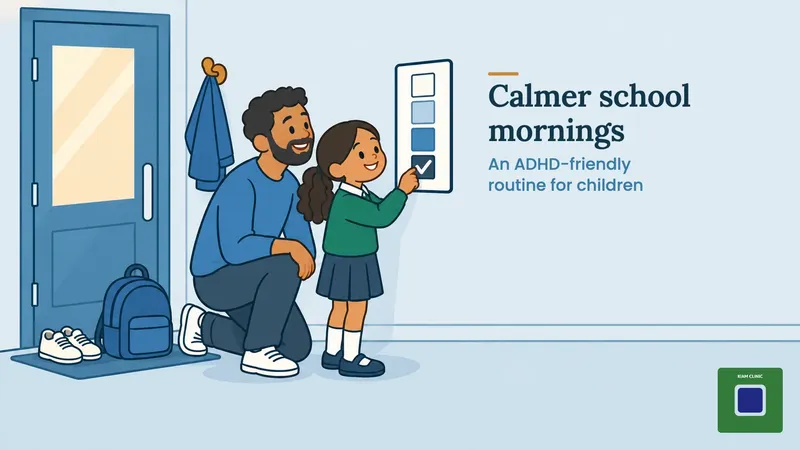
An ADHD-friendly morning routine gives your child the same clear steps in the same order each day, shown somewhere they can see them. Preparing some jobs the night before, giving one calm instruction at a time and noticing what goes well can all make school mornings easier.
This guide sets out practical ideas, drawn from NHS, NICE and YoungMinds advice, that you can adapt for your family.
In short
- Children with ADHD often do better with structure and a predictable order to the day.
- A visual checklist and one instruction at a time can help your child follow the routine.
- Moving some jobs to the evening makes mornings less rushed.
- Praise and reward charts can encourage the steps that go well.
- The school's SENCo can help plan support at home and at school.
Why are mornings so hard for children with ADHD?
Getting ready for school relies on the skills ADHD can make harder. These include staying focused, remembering what comes next and not getting sidetracked.
The NHS explains that children with ADHD may be easily distracted, find it hard to follow instructions, and forget everyday tasks like brushing their teeth or putting on socks. YoungMinds adds that they may struggle with remembering and organising things. A school morning brings all of these together, against the clock.
So a hard morning isn't your child being difficult on purpose, and it isn't a sign of poor parenting. It's a sign that the routine needs more support built in.
What does an ADHD-friendly morning routine look like?
A good routine is predictable, short and visible. NICE guidance on ADHD recommends advising parents about the importance of structure in a child's day.
Ideas to try:
- Keep the same order every day, for example: wake up, toilet, get dressed, breakfast, teeth, shoes, bag.
- Make it visual. The NHS suggests writing a to-do list and putting it somewhere easy to see. For younger children, simple pictures work well.
- Break big jobs into small steps. YoungMinds suggests saying "first brush your teeth, then put on your shoes", rather than "get yourself ready for school".
- Reduce distractions. NICE gives reducing distractions as an example of a helpful change to a child's surroundings. You might keep the TV off until your child is ready.
How can the night before make mornings calmer?
Doing jobs the evening before leaves fewer decisions for a rushed morning. YoungMinds suggests planning the day so your child knows what to expect.
You could:
- lay out school clothes together;
- pack the school bag and leave it by the door;
- check the next day's timetable, such as PE kit or a trip letter.
Sleep matters too. The NHS encourages regular sleep for children with ADHD, and YoungMinds says good sleep patterns and regular mealtimes can help. A calm, regular bedtime can make the next morning easier.
How should you give instructions in the morning?
Short, calm and one at a time works better than a long list. The NHS suggests giving clear and simple instructions, one at a time, in a calm voice.
Some ways to put this into practice:
- Get your child's attention first, by saying their name or standing close by, before asking.
- Point to the checklist instead of repeating the whole list out loud.
NICE also recommends advising parents on clear and appropriate rules and consistent management. Using the same words and steps each day helps your child know what's expected.
Do praise and reward charts help?
Noticing what goes well can make a real difference. The NHS lists giving praise when a child does well, or making a reward chart, as ways to support a child with ADHD.
Keep rewards small and immediate, and praise the effort as well as the result: "You got your shoes on straight after breakfast, well done." NICE highlights the importance of positive contact between parents and children, so a calm, warm start matters as much as a quick one.
What if you have ADHD too?
ADHD often runs in families, so some parents are managing their own ADHD while helping a child with theirs. NICE guidance asks professionals to think about whether a parent with ADHD needs extra support with organisation, including daily school routines.
The same tools can help you both. A shared checklist, alarms and an evening "launch pad" by the door can take pressure off the whole household.
Frequently asked questions
How can I get my child with ADHD ready for school without shouting?
Try giving one short instruction at a time, in a calm voice, after you have your child's attention. The NHS recommends this approach for children with ADHD. A visual checklist lets you point to the next step instead of repeating yourself. Doing some jobs the night before also means less rushing, which can make calm mornings more likely for everyone.
Can a reward chart help a child with ADHD?
It can for some children. The NHS lists giving praise and making a reward chart among the ways parents and schools can support a child with ADHD. You might keep rewards small and linked to specific steps, such as getting dressed before breakfast, and praise effort as well as success.
Should I tell my child's school about difficult mornings?
Yes, it can help. The NHS suggests talking to the school's special educational needs coordinator (SENCo) about adjustments or support that may help at home and at school. If your child often arrives late or unsettled, the school may be able to help with a calmer start to the day.
Does my child need a diagnosis to get help with routines?
No. The NHS says children should keep getting support at home and at school while waiting for a referral or assessment. A teacher can involve the SENCo, who can discuss support in the classroom and with homework. The NHS also says the GP or SENCo may recommend local support groups or training for parents.
When to get help
It's worth getting a professional view if:
- mornings are a struggle most days, despite a clear routine;
- your child also has difficulties with focus, restlessness or impulsiveness at school;
- the pattern is affecting their learning, friendships or family life.
Start by talking to your child's teacher or the SENCo, and your GP. You can also read more about how we support ADHD at every age. If you'd like a specialist opinion, our ADHD assessment for children and young people is led by Dr Hadi Shaker Naeeni, our Consultant Child and Adolescent Psychiatrist, online or at our Epsom clinic. You can compare our assessment options before you decide.
Every family's mornings look a little different. Small, steady changes, and a lot of kindness on the harder days, can go a long way.
Related reading
- Signs of ADHD in children: what parents and teachers notice first: how ADHD can show up at home and at school, if you're wondering whether it's ADHD.
References
- ADHD in children and teenagers. NHS, 2025.
- Attention deficit hyperactivity disorder: diagnosis and management (NG87). NICE, 2018, updated 2019.
- ADHD: a guide for parents. YoungMinds, 2026.
Useful resources
- YoungMinds parents helpline and advice: information and support for parents worried about a child's mental health.
- ADHD UK: a UK charity offering information and online support groups for people affected by ADHD, including parents.
- Children with special educational needs and disabilities (SEND): GOV.UK's guide to the support schools can give.
This article is for general information. It is not a diagnosis or a substitute for advice from a qualified professional who knows your situation.