
Blog
Articles on adult ADHD assessment, treatment and wellbeing.
Showing posts tagged “adhd”. Clear
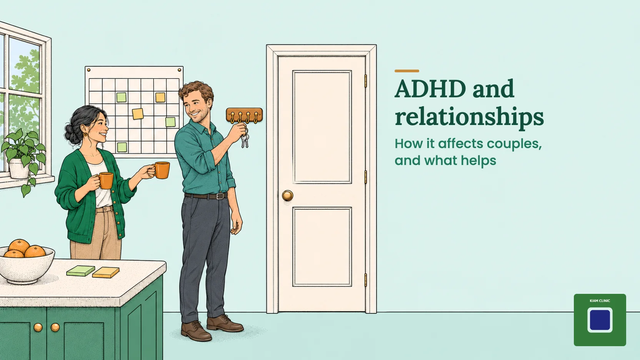
ADHD and relationships: how it affects couples, and what helps
ADHD can affect relationships in everyday ways: forgetting plans, losing track of time, interrupting or making quick decisions. A partner may read these as not caring, which can lead to frustration on both sides. Learning about ADHD together, agreeing practical systems and getting the right support can make a real difference.
21 October 2026 · Kiam Clinic · 7 min read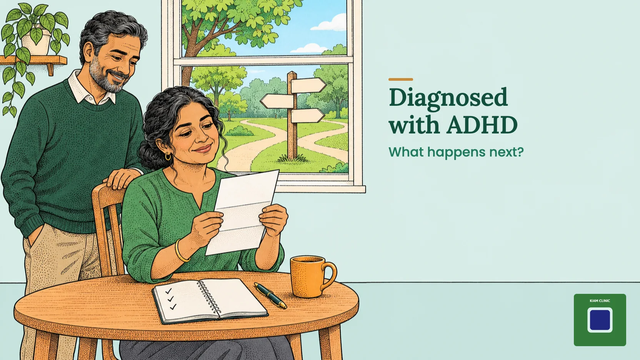
Diagnosed with ADHD: what happens next?
After an ADHD diagnosis, your specialist should talk through what it means for your life and agree a treatment plan with you. That can include changes to routines, talking therapies or coaching, and medication if it suits you. Relief, frustration and sadness are all normal, and you can revisit treatment choices later.
19 October 2026 · Kiam Clinic · 7 min read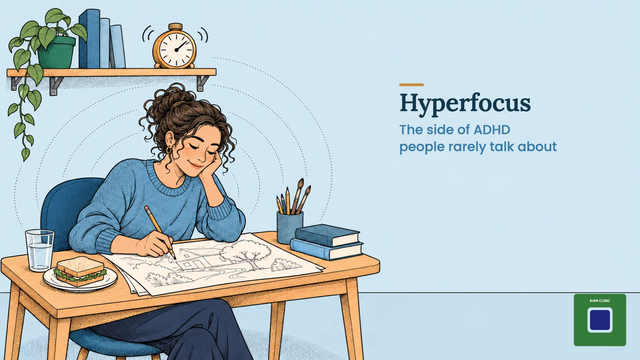
Hyperfocus: the side of ADHD people rarely talk about
Hyperfocus is deep, absorbed attention on one task, so complete that time and surroundings seem to fade. Many people with ADHD experience it, especially with things they find interesting, though it is not a diagnostic symptom. It can be a real strength, but it can also crowd out meals, sleep and plans.
18 October 2026 · Kiam Clinic · 7 min read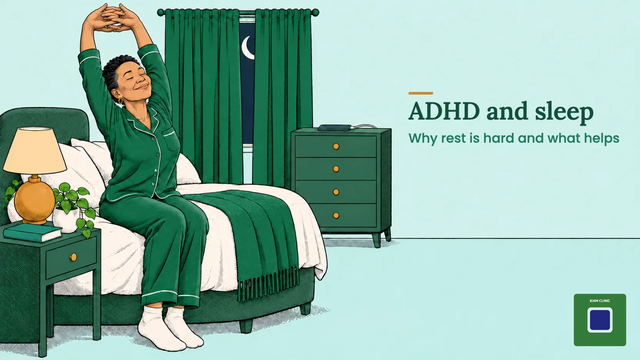
ADHD and sleep: why rest is hard and what helps
Sleep problems are common in people with ADHD. Many find it hard to switch off at night, fall asleep late and struggle to wake in the morning. Poor sleep can then make ADHD symptoms worse. A steady routine and a calm bedroom often help, and a GP can help if problems last.
17 October 2026 · Kiam Clinic · 7 min read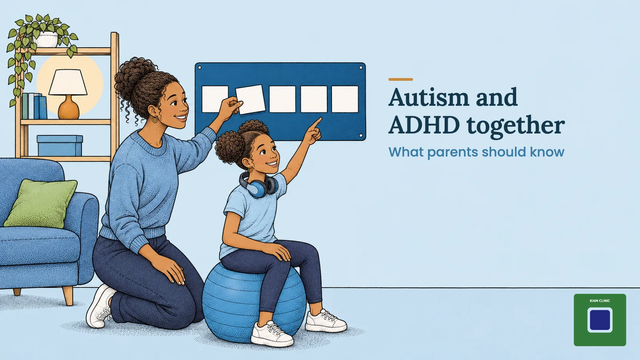
Autism and ADHD together: what parents should know
Yes, autism and ADHD can happen together, and it is common: a 2019 review found about 28% of autistic people also have ADHD. Some signs overlap, one condition can hide the other, and a child can be diagnosed with both. A good assessment looks at the whole child, including any co-occurring conditions.
16 October 2026 · Kiam Clinic · 7 min read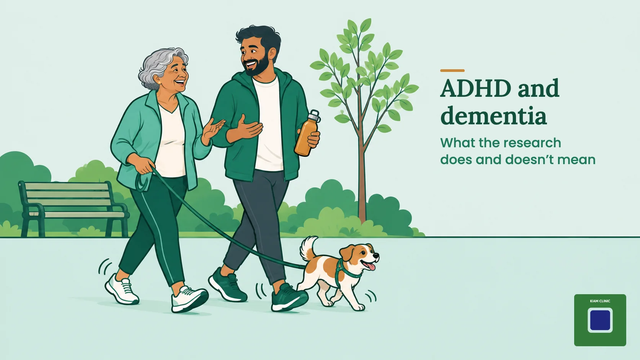
ADHD and dementia: what the research does and doesn't mean
Some studies link adult ADHD with a higher chance of dementia in later life. But a link is not proof that ADHD causes dementia, and most people with ADHD never develop it. We explain what a 2025 review found, what it can and can't tell us, and the everyday steps that help lower dementia risk.
16 October 2026 · Kiam Clinic · 7 min read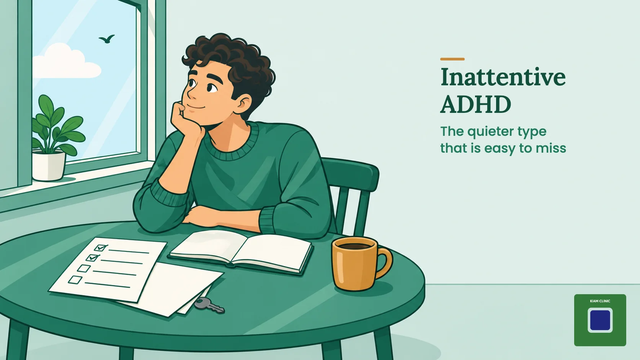
Inattentive ADHD: the quieter type that is easy to miss
Inattentive ADHD is a form of ADHD where the main difficulties are with focus, organisation and forgetfulness, with few or no signs of hyperactivity. It is often missed because it is quiet rather than disruptive. Signs include losing things, leaving tasks unfinished and being easily distracted. Only a specialist assessment can diagnose it.
15 October 2026 · Kiam Clinic · 7 min read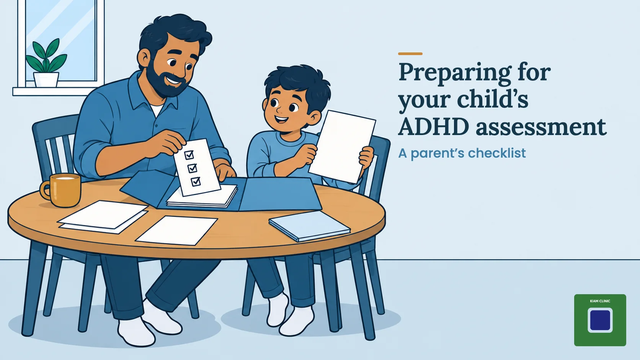
Preparing for your child's ADHD assessment: a parent's checklist
To prepare for a child ADHD assessment, gather a clear picture of how your child is at home and at school, from early childhood to now. Note their early development, collect school reports and any support plan, write down recent examples, and talk to your child simply about what will happen on the day.
14 October 2026 · Kiam Clinic · 7 min read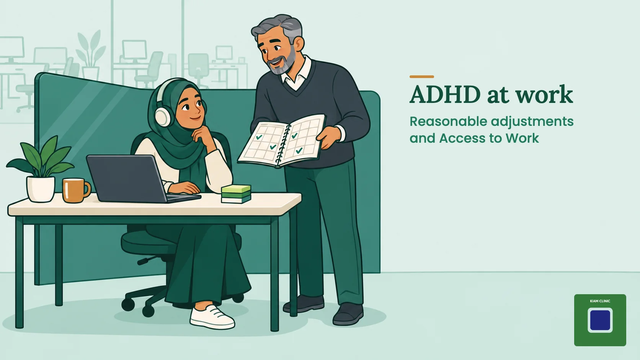
ADHD at work: reasonable adjustments and Access to Work
If ADHD makes parts of your job harder, your employer must consider reasonable adjustments, such as a quieter workspace or written instructions, if your ADHD counts as a disability under the Equality Act. The government's Access to Work scheme can also pay for support like a job coach, and you do not need a diagnosis to apply.
13 October 2026 · Kiam Clinic · 7 min readGet new articles on WhatsApp
We share our new articles on the Kiam Clinic WhatsApp channel. Follow it to see them in your WhatsApp Updates.