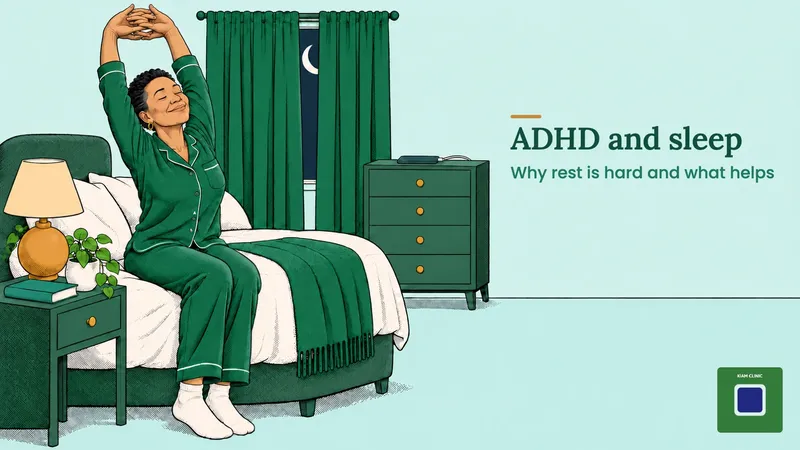
Sleep problems are common in people with ADHD, in children and adults. A busy mind, a body clock that runs late and routines that slip can all make rest hard to come by.
Small, steady changes often help. Here is why ADHD sleep problems happen, what you can try, and when to get support.
In short
- Research suggests a quarter to over half of people with ADHD have disturbed sleep.
- Poor sleep can make ADHD symptoms worse, and tiredness can look like ADHD.
- A regular routine, a calm bedroom and fewer late screens are the first steps.
- See your GP if sleep problems last for months or make it hard to cope.
How does ADHD affect sleep?
ADHD often affects how easily you fall asleep, how well you stay asleep and how hard it is to wake up. A review of research on ADHD and sleep found that between 25% and 55% of people with ADHD are reported to have disturbed sleep.
The problems most often reported include:
- Resisting bedtime, especially in children.
- Taking a long time to fall asleep, then sleeping for less time overall.
- Waking in the night.
- Finding mornings very hard.
- Feeling sleepy during the day.
What causes ADHD sleep problems?
There is usually more than one reason. The same review describes several:
- A late body clock. Some people with ADHD have a "delayed sleep phase": their natural sleep time runs much later than the day around them. Getting to sleep before midnight can feel almost impossible.
- A restless mind. Racing thoughts can make lying still in the dark hard.
- Other sleep conditions. Restless legs syndrome and sleep apnoea (breathing that stops and starts during sleep) are found more often alongside ADHD.
- Stress, anxiety or low mood. The NHS lists these among the most common causes of insomnia.
For example, someone might feel tired all evening, then wide awake at 11pm, scrolling until 2am.
Can poor sleep make ADHD symptoms worse?
Yes. The Royal College of Psychiatrists says not sleeping well can make ADHD symptoms worse. Anyone can struggle to concentrate after a bad night's sleep.
The link works both ways: sleep problems can also cause or mimic ADHD-like difficulties. That is one reason a specialist asks about sleep. NICE guidance on ADHD says a treatment plan should take into account how symptoms affect everyday life, including sleep.
What helps? Building an ADHD bedtime routine
Guidelines recommend healthy sleep habits as the first step, the review notes. Tips from the NHS and the Royal College of Psychiatrists include:
- Keep the same times. Go to bed and get up at the same time every day, including weekends.
- Wind down for an hour. A bath, music or a book can help. A phone reminder can stop wind-down time slipping past.
- Put screens away. Avoid phones and TV for about an hour before bed.
- Watch what you drink. Avoid caffeine, alcohol and sugar close to bedtime. The NHS suggests no tea or coffee for 6 hours before bed.
- Move during the day. Exercise helps, but not in the 4 hours before bed.
- Make the bedroom dark and quiet. Curtains, an eye mask or ear plugs can help.
- Don't sleep in after a bad night. Stick to your usual wake-up time.
How can you help a child with ADHD sleep?
The same calm, predictable approach helps children. The Royal College of Psychiatrists' guide for parents suggests regular times for bed and getting up, and a relaxing bedtime routine, such as a bath and a short story.
For teenagers, it suggests 30 minutes of "quiet time" before bed, with no TV, texting, homework or computer. The NHS also encourages regular sleep for children with ADHD. Your GP or health visitor can advise if problems carry on.
What if you take ADHD medication?
Tell your prescriber about any change in your sleep, and don't change medication on your own. NICE recommends monitoring sleep during ADHD treatment, for example with a sleep diary. At Kiam, our ADHD follow-up appointments check sleep and mood at every review.
Frequently asked questions
Is insomnia a symptom of ADHD?
Insomnia is not one of the symptoms used to diagnose ADHD, but it often comes alongside it. Research suggests a quarter to over half of people with ADHD have disturbed sleep. The NHS says you have insomnia if you regularly find it hard to fall asleep, wake several times in the night, or wake early and cannot get back to sleep.
Can lack of sleep look like ADHD?
Yes. Research shows that sleep problems can cause or mimic ADHD-like difficulties, such as poor concentration and irritability. That is why sleep is part of a full ADHD assessment. A specialist will ask about it and look at your history since childhood, because ADHD symptoms start early and affect more than one area of life.
Does ADHD make you a night owl?
Many people with ADHD say they feel most awake late at night. Research describes a "delayed sleep phase" in some people with ADHD, where the body clock runs later than usual. This can make early mornings very hard. A consistent wake-up time, even at weekends, is one of the most useful habits to build.
When to get help
The NHS suggests seeing a GP if:
- changing your sleeping habits has not helped;
- you have had trouble sleeping for months;
- poor sleep is making it hard to cope with daily life.
A GP may offer cognitive behavioural therapy (CBT) for insomnia, or refer you to a sleep clinic.
If sleep is one of several long-standing struggles and you have never been assessed for ADHD, see our ADHD services. Our free five-minute ADHD self-screening test is a good first step. It can't diagnose ADHD, but it can help you decide whether to book an assessment with one of our consultant psychiatrists, such as Dr Abbass Mohammadinasab, online or at our Epsom clinic.
If you are worried about your child, talk to the school's SENCo and your GP. We also offer a child ADHD assessment with a Consultant Child and Adolescent Psychiatrist.
Better sleep rarely comes from one big change. Start small, and be patient with yourself.
Need help now? If you think you might act on thoughts of suicide or you are in danger, call 999 or go to A&E. For urgent mental health help, call NHS 111 and choose the mental health option. You can talk to Samaritans any time, free, on 116 123, or text SHOUT to 85258.
Related reading
- Adult ADHD symptoms: what they can look like day to day: how ADHD shows up at home, including slipping routines.
- Signs of ADHD in children: what parents and teachers notice first: signs to look for if sleep is one of several worries.
References
- Associations of sleep disturbance with ADHD: implications for treatment. Hvolby A. ADHD Attention Deficit and Hyperactivity Disorders, 2015.
- ADHD in adults. Royal College of Psychiatrists, 2023.
- Insomnia. NHS, 2024.
- Attention deficit hyperactivity disorder: diagnosis and management (NG87), Recommendations. NICE, 2018, updated 2019.
- Attention deficit hyperactivity disorder (ADHD) in adults. NHS, 2025.
- Sleep problems in childhood and adolescence: for parents and carers. Royal College of Psychiatrists, 2015.
- Attention deficit hyperactivity disorder (ADHD) in children and young people. NHS, 2025.
Useful resources
- NHS Every Mind Matters: sleep problems: practical tips, short videos and a free six-week email programme for better sleep.
- Royal College of Psychiatrists: sleeping well: a clear guide to how sleep works, common problems and when to seek help.
- ADHD UK: a charity offering information about ADHD for adults and families.
- AADD-UK: a charity for adults with ADHD, with links to local support groups.
This article is for general information. It is not a diagnosis or a substitute for advice from a qualified professional who knows your situation.