The signs of ADHD in children fall into two groups: inattention, and hyperactivity with impulsivity. At home, parents may first notice forgetfulness or constant fidgeting; at school, teachers may notice a child who drifts off, calls out or struggles to wait their turn. ADHD stands for attention deficit hyperactivity disorder.
NHS guidance on ADHD in children describes both groups, and notes that many children show some of these signs without having ADHD. What sets ADHD apart is the pattern. NICE guidance on ADHD looks for signs that happen often, in more than one setting, and cause real difficulties.
In short
- ADHD signs fall into two groups: inattention and hyperactivity with impulsivity.
- With ADHD, the signs are stronger than in other children the same age, appear in more than one setting and cause real problems.
- Hyperactivity can be more obvious in young children; other difficulties may show more in the teenage years.
- Start by talking to your child's teacher, the school's SENCo and your GP.
- Only a specialist can diagnose ADHD, using information from home and school.
What are the signs of ADHD in children?
The NHS says most children with ADHD show signs from both groups. Here is how they can look at home and at school.
Inattention: finding it hard to focus and stay organised
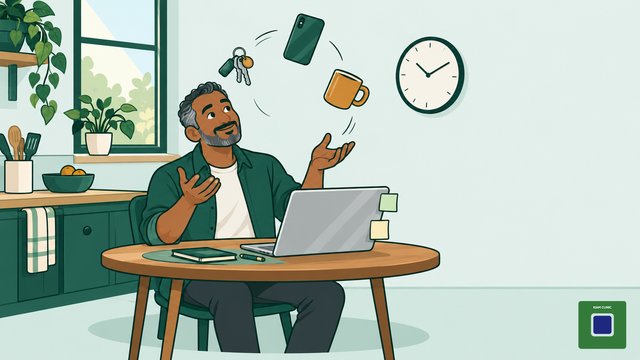
- At home: forgetting routines like brushing teeth; losing things like homework or keys; leaving jobs half-finished; seeming to daydream when spoken to.
- At school: careless mistakes, such as skipping questions; disorganised work; not seeming to listen; finding instructions hard to follow.
Hyperactivity and impulsivity: restless energy and acting without thinking
- At home: always on the go; fidgeting or tapping hands and feet; interrupting conversations; doing risky things without stopping to think.
- At school: finding it very hard to stay seated in lessons; talking over others; struggling to wait their turn.
The Royal College of Psychiatrists notes that symptoms depend on the setting, including whether a child is enjoying the activity. So focusing well on a favourite game does not rule ADHD out.
The College adds that children with ADHD are probably not being disruptive on purpose. They need support, not punishment.
How are ADHD symptoms in children different from typical behaviour?
The difference is how strong the signs are for your child's age, where they happen and how much they get in the way. The NHS says many children, especially under 5, are easily distracted, impulsive and full of energy without having ADHD. It could be a sign of something else, like being tired or anxious.
These four questions make a simple child ADHD checklist. They are not a test, just a way to organise what you have noticed.
- Is it much more than in other children the same age? The Royal College of Psychiatrists says a 12-year-old can usually pay attention for much longer than a 2-year-old.
- Does it happen in more than one place? NICE looks for symptoms in two or more settings, such as home, school or time with friends.
- Is it causing real problems? NICE also looks for at least moderate difficulties with learning, friendships or wellbeing.
- Has it gone on for a long time? The NHS says symptoms usually start before age 12. A few unsettled weeks after a house move is different from a lasting pattern.
Research suggests around 5 in every 100 children have ADHD (Sayal and colleagues, 2018). At least as many again have substantial difficulties just below the threshold for a diagnosis. Either way, a child who is struggling deserves support.
How do the signs change as children grow?
The Royal College of Psychiatrists says ADHD often becomes obvious before age 12, but it can look different at each stage.
- Under 5s: hyperactivity can be more obvious, but high energy and short attention spans are also typical at this age.
- Primary school: how ADHD shows depends partly on how structured a setting is. For example, a child might cope at home but struggle in a lesson that asks them to sit still and wait.
- Teenagers: difficulties can become clearer as demands grow, such as more homework. Sayal and colleagues report that ADHD is more often missed in older children, and the College says it does not simply disappear with age.
How can your child's school and SENCo help?
The NHS suggests talking to one of your child's teachers first if you are worried.
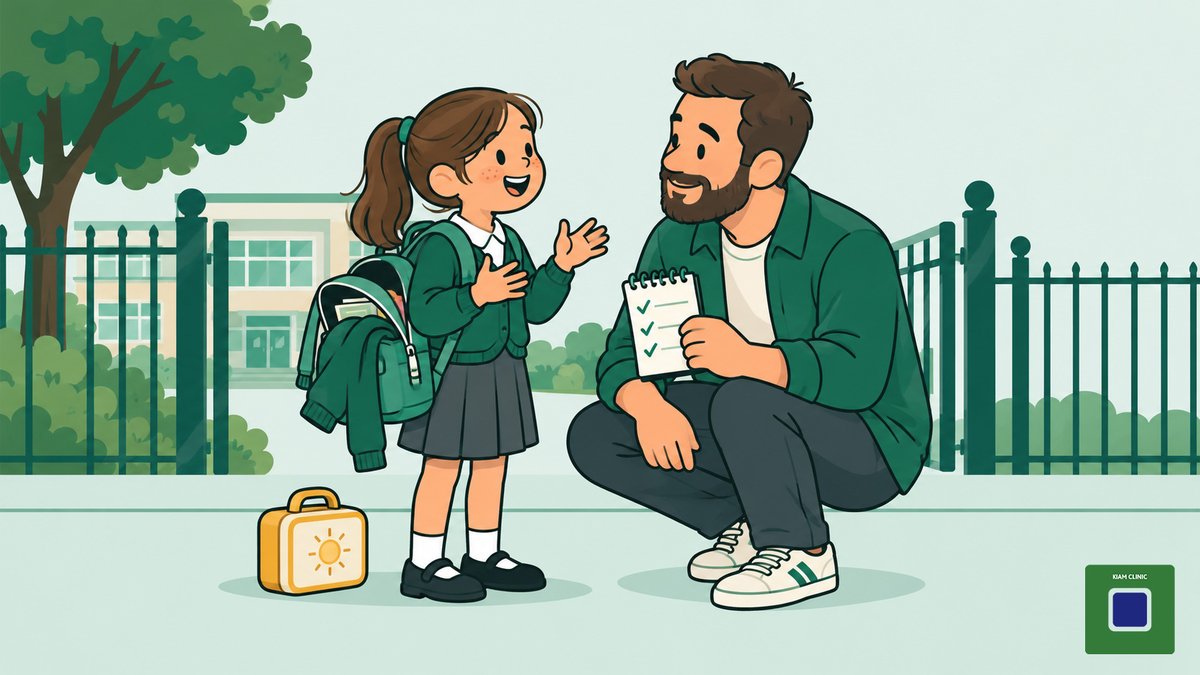
- Talk to the teacher. Ask what they see in class and at break, and share what you see at home. They will usually involve the SENCo.
- Meet the SENCo. The special educational needs co-ordinator (SENCo) organises extra help at school. The NHS says they can discuss support in class or with homework, confidence and friendships.
- Ask about SEN support. GOV.UK guidance on SEN support gives examples such as extra help from a teacher or assistant, or working in a smaller group.
- Support can start before a diagnosis. The NHS says children should keep getting support at home and at school while waiting for an assessment.
If you are offered a parenting programme, NICE is clear that this does not imply bad parenting. It helps parents meet the extra needs of a child with ADHD.
When should you talk to your GP?
The NHS suggests seeing a GP if you are still worried or your child needs more support. NICE says the GP should find out how severe the difficulties are and where they happen.
The GP may:
- consider other explanations, such as autism, Tourette syndrome or anxiety
- suggest a parents' group focused on ADHD, which NICE says should not wait for a diagnosis
- watch and wait for up to 10 weeks, then refer to a specialist if problems continue, or sooner if they are severe
What happens in a child ADHD assessment?
NICE says GPs should not diagnose ADHD in children themselves. That is for a specialist, such as a child psychiatrist or paediatrician (a children's doctor).
The specialist should look at how your child behaves in different settings and take a developmental history: how your child has grown and developed since birth. They should also use reports from teachers and others, and take your child's own views into account.
At Kiam Clinic, our child ADHD assessment follows NICE guidance. It is with Dr Hadi Shaker Naeeni, a Consultant Child and Adolescent Psychiatrist: a doctor specialising in the mental health of children and young people. You can choose secure video or our clinic in Epsom, Surrey.
- Before: we send questionnaires to you and, with your permission, your child's school, and ask for teacher reports and any support plan.
- The appointment: 90 to 120 minutes with you and your child. It covers development, how difficulties show at home and at school, and your child's own account.
- Afterwards: a written report for you, and a letter to your GP with the findings and recommended next steps.
- If ADHD is diagnosed: we discuss options such as support for parents, strategies for home and school, and treatment where appropriate.
Frequently asked questions
Can a child have ADHD without being hyperactive?
Yes. The NHS says some children with ADHD mainly show signs of inattention, so they may seem dreamy or disorganised rather than disruptive. These quieter signs can be harder to recognise, and the NHS says this may be one reason ADHD is recognised less often in girls.
Is there a child ADHD checklist I can use?
No checklist can tell you whether your child has ADHD. Specialists use questionnaires called rating scales, filled in by parents and teachers, but NICE says a diagnosis should not rest on these alone. A more useful checklist is a simple record of what you notice, where, how often and since when.
At what age can ADHD be diagnosed?
NICE says ADHD should be considered in all age groups, with the signs judged against what is typical for a child's age. Symptoms usually start before the age of 12. In very young children it can be harder to tell, as many under-5s are lively and easily distracted.
Does ADHD run in families?
Often, yes: the NHS says ADHD may be caused by genetic differences and often runs in families. NICE notes that a parent's own ADHD may have been missed in the past. If you recognise your own childhood in these signs, it may help to know that adults can be assessed for ADHD too.
When to get help
It is worth asking for a professional view if:
- the signs seem much stronger than in other children your child's age, at home and at school
- they are affecting learning, friendships or family life
- support at home and at school has not been enough
A good first step is to talk to your child's teacher or SENCo, and your GP. For a specialist opinion, our assessment for children and young people is with a Consultant Child and Adolescent Psychiatrist. You can also check what an assessment costs.
Noticing these signs is not a judgement on your child or your parenting, and no one is to blame for ADHD. Asking for support is a caring first step.
Related reading
- What Actually Happens in an Adult ADHD Assessment? If these signs remind you of your own childhood, this explains how adults are assessed for ADHD.
References
- ADHD in children and young people. NHS, 2025.
- Attention deficit hyperactivity disorder: diagnosis and management (NG87). NICE, 2018, updated 2019.
- ADHD in children and young people: for parents and carers. Royal College of Psychiatrists, 2025.
- ADHD in children and young people: prevalence, care pathways, and service provision. Sayal K, Prasad V, Daley D, Ford T, Coghill D. The Lancet Psychiatry, 2018.
- Children with special educational needs and disabilities (SEND): special educational needs support. GOV.UK, 2014.
Useful resources
- ADHD UK: diagnosis pathways for children: a step-by-step guide to the routes to an ADHD assessment for a child in the UK.
- YoungMinds Parents Helpline: free, confidential advice by phone, webchat or email for parents and carers worried about their child.
This article is for general information. It is not a diagnosis or a substitute for advice from a qualified professional who knows your situation.